Zero looks unusual, but the rule for deciding whether a number is even or odd is actually very simple once the definition is clear.
People usually arrive at this question with a few practical doubts in mind: Can zero be divided by two evenly? Does zero count as a whole number? Why do some classroom explanations make it sound like zero sits outside the normal odd-or-even pattern? Those are fair questions, especially because zero behaves differently from other numbers in many contexts.
The shortest answer is that zero is even. In standard arithmetic, an even integer is any number that can be written as 2n for some integer n. Zero fits immediately, because 0 = 2 × 0. Britannica’s explainer on zero and the standard mathematical discussion of parity both point back to that same rule: if dividing by two leaves no remainder, the number is even.
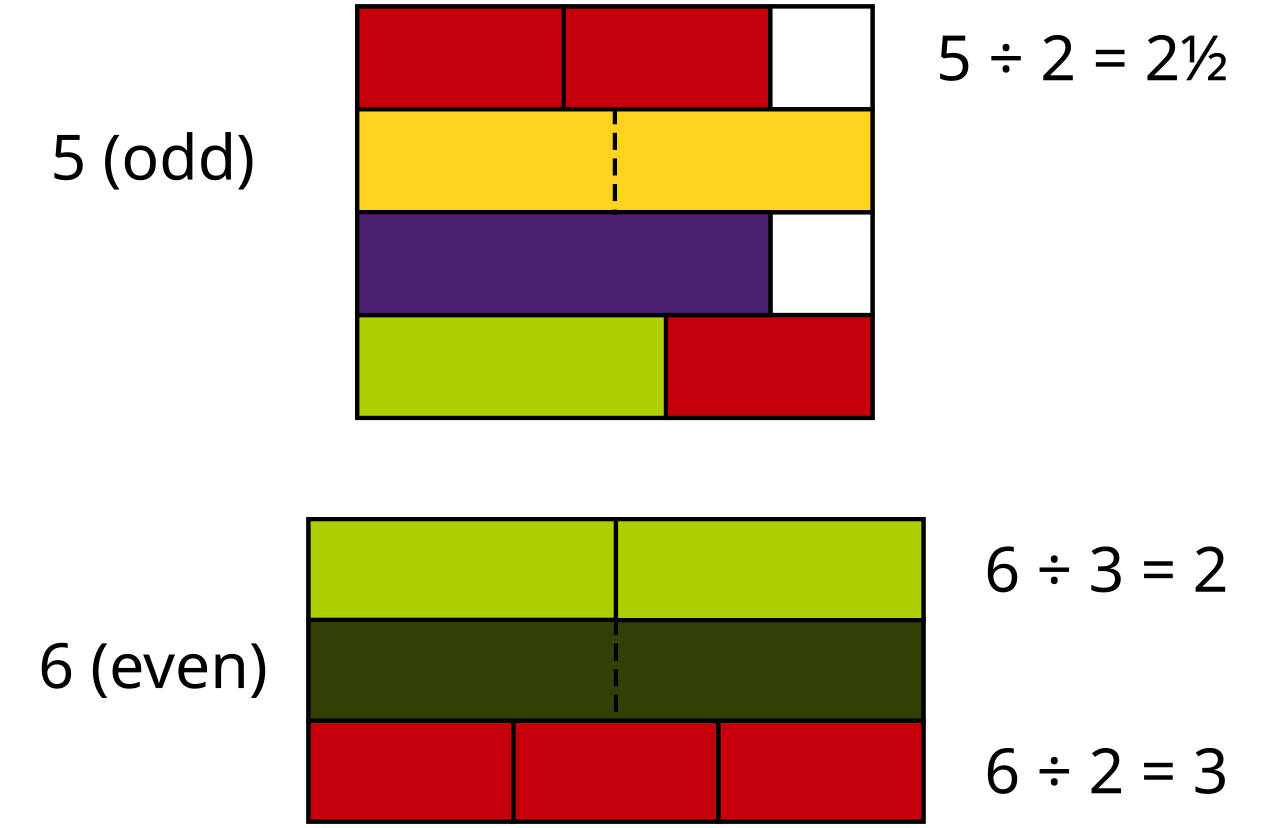
What “even” actually means
In day-to-day language, people often learn even numbers by memorizing examples: 2, 4, 6, 8, and so on. That works for a while, but the better definition is structural. A whole number is even if you can split it into two equal groups with nothing left over. With 6 apples, each group gets 3. With 10 chairs, each side gets 5. With zero objects, each group gets zero objects. There is still no remainder.
This is exactly why zero belongs with the even numbers and not in a special category. When a teacher or parent says “even numbers come in pairs,” zero still qualifies. It represents zero pairs with zero left over.
Why the confusion keeps coming back
Zero feels different because it often marks an absence rather than a quantity we can hold. It is also the boundary between positive and negative integers, which makes people wonder whether the usual rules apply. They do. In fact, zero is one of the cleanest examples of the parity rule because it leaves no remainder at all.
Another source of confusion is that some explanations mix up several ideas at once:
- Whole number status: zero is a whole number and an integer.
- Parity: every integer is either even or odd.
- Division by zero: this is undefined, but it has nothing to do with whether zero itself is even.
That third point matters. People sometimes hear “you can’t divide by zero” and assume zero is mathematically abnormal in every possible way. But the question here is the opposite operation: can zero be divided by two? Yes, and the result is still a whole number.
A quick test you can use
If you want a fast classroom-friendly test, use one of these:
- Can the number be written as
2nfor an integern? - Does dividing by 2 leave remainder 0?
- Can the set be split into two equal groups?
Zero passes all three tests. That is why arithmetic textbooks, encyclopedias, and math references are consistent on the answer. If a rule puts 2 and 4 in the even category, it also includes 0.
Why this matters beyond a trivia question
On the surface, this looks like a small puzzle, but it turns up in real learning. Students meet parity early in arithmetic, then again in algebra, number theory, and programming. In code, parity checks are used in loops, array indexing, and logic branches. If the rule suddenly excluded zero, many common patterns would become clumsy and inconsistent.
Suppose a program checks whether a counter is even before running a step. If the counter starts at 0, treating zero as odd would break the pattern immediately. Mathematics prefers definitions that stay stable when numbers move through predictable sequences: ... -4, -2, 0, 2, 4 ... are even; ... -3, -1, 1, 3 ... are odd.
Common mistakes to avoid
- Mistake 1: thinking zero is neither even nor odd because it is “nothing.” Zero still behaves like an integer in parity rules.
- Mistake 2: mixing up “cannot divide by zero” with “zero cannot be divided.” Those are completely different statements.
- Mistake 3: assuming odd numbers are all the numbers that are not positive evens. Odd and even are defined across positive, negative, and zero values.
A short classroom example
Imagine laying out pairs of gloves. If there are 8 gloves, you can make 4 pairs. If there are 2 gloves, you can make 1 pair. If there are 0 gloves, you can make 0 pairs. In all three cases, nothing is left unmatched. That is the intuitive reason zero stays in the even set.
For readers who want a formal explanation, resources such as Britannica, Wolfram MathWorld’s even-number entry, and Khan Academy’s parity review all line up on the same core definition.
Final answer
Zero is an even number. It can be divided by 2 with no remainder, it can be written as 2 × 0, and it fits the pattern mathematicians use for parity across all integers. Once that definition is in place, the question stops being mysterious.
If you want more general reference reading, the blog index collects the site’s other explainers and topic guides.