Lingerie history is really a history of changing ideals: what bodies were expected to look like, how women were expected to move, and how private clothing slowly became part of public fashion.
Most readers come to this topic with the same set of questions. When did structured corsets turn into bras and softer separates? Why did silhouettes swing from rigid to relaxed and back again? And why do so many modern collections still borrow from styles that first appeared decades, or even centuries, ago? Coco Chanel once said, “Fashion is architecture: it is a matter of proportions.” Lingerie may be one of the clearest proofs of that idea.
There is a reason the subject keeps pulling people in. Garments such as the corset, the slip, the bra, and modern shapewear are not random fashion side notes. They sit right at the meeting point of clothing, culture, comfort, and expectation. Resources like the Fashion History Timeline’s 1920s overview show how quickly undergarments changed once women started dressing for movement, nightlife, and a less restricted silhouette.
In the plain version, this article gives you a quick map of where lingerie came from, what changed in the biggest fashion eras, and why those changes mattered beyond the closet. We will look at Victorian corsetry, the 1920s flapper shift, the 1950s hourglass revival, the cultural debates that shaped intimate apparel, and the way current designers keep remixing older ideas with better materials and a broader idea of who lingerie is actually for.
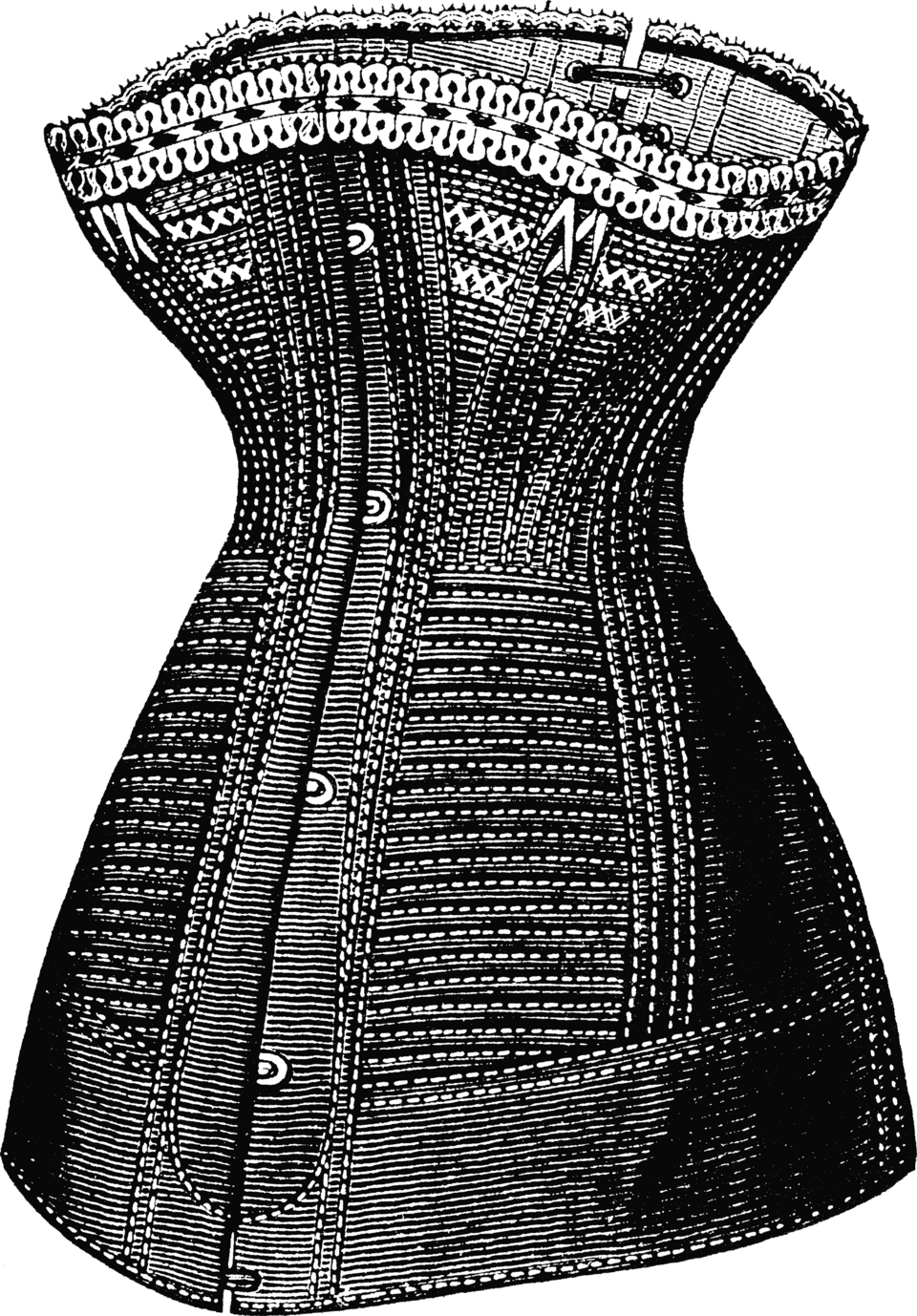
1882
Structured corset styling
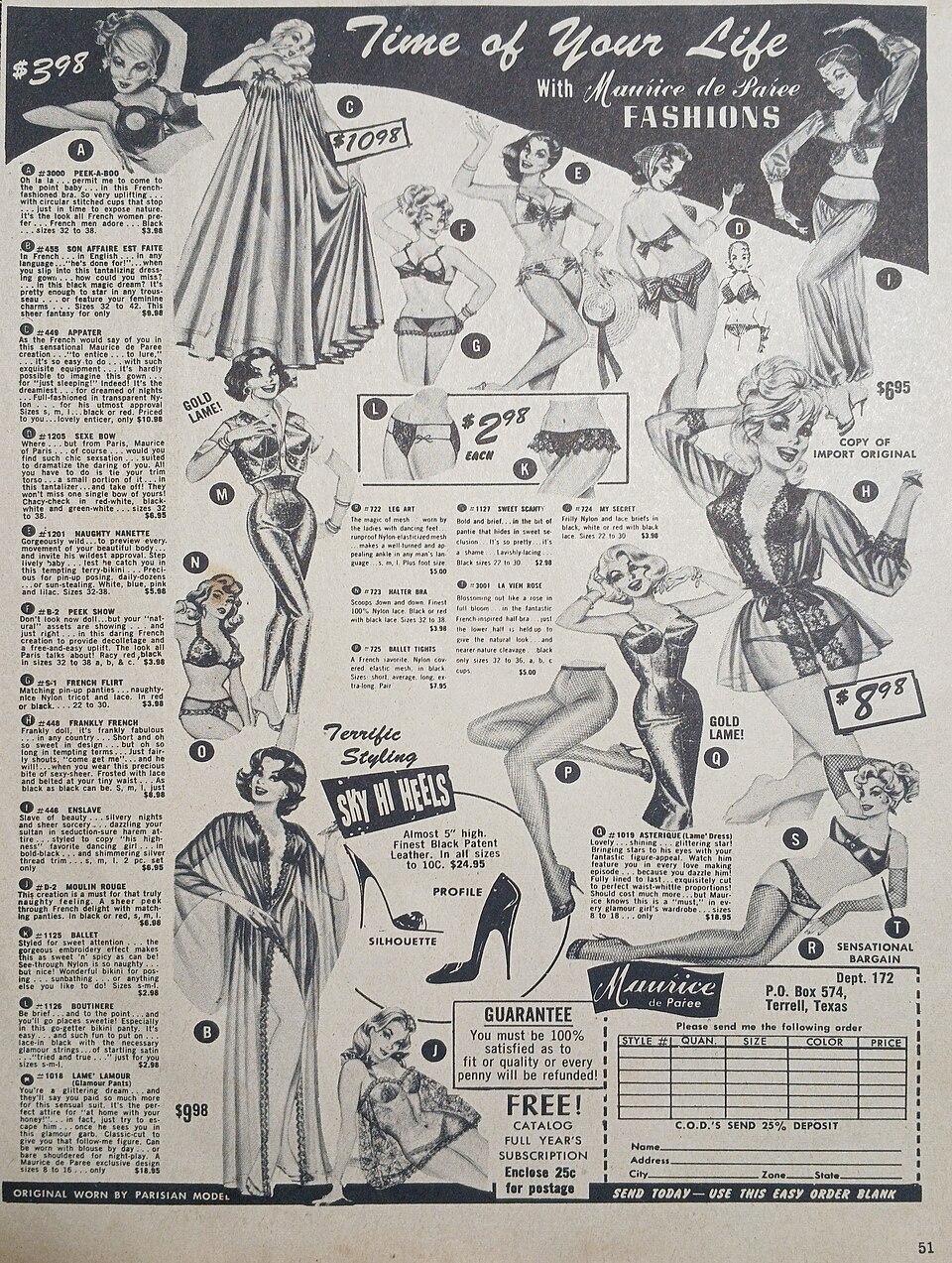
1950s
Catalog-ready hourglass glamour
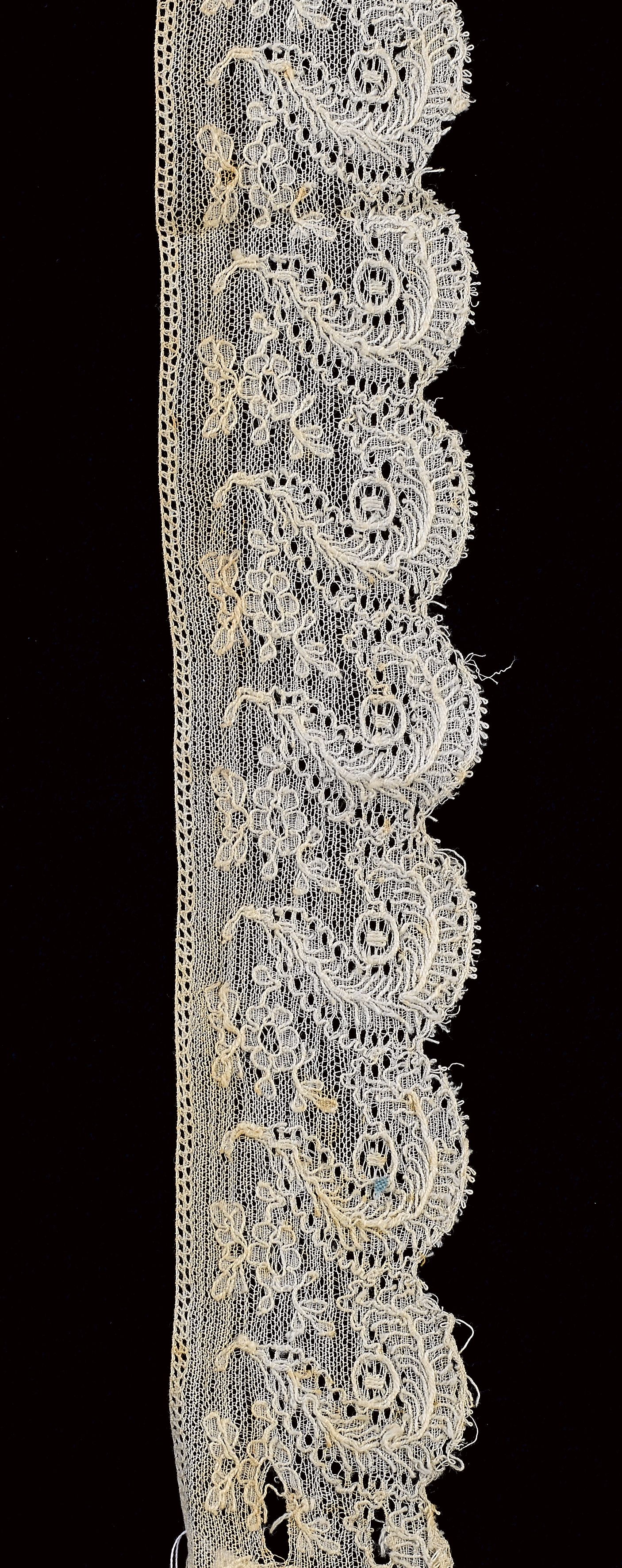
Today
Modern lace detail and lighter construction
A quick map of the terms
Before the timeline gets crowded, it helps to sort out a few words people often use as if they all mean the same thing.
- Lingerie usually refers to intimate apparel designed with both function and appearance in mind. That can include bras, briefs, slips, camisoles, bustiers, shapewear, and sleep pieces.
- Stays were early structured bodices used before the modern corset took over. They shaped the torso, but they were not identical to the late nineteenth-century corset most people picture first.
- Corset refers to a fitted foundation garment that shaped the waist, bust, and torso. Not every corset was designed for extreme tight lacing, even if that image gets most of the attention.
- Foundation garment is the broader term for underwear meant to shape or support the body under clothing.
- Ready-to-wear lingerie describes the shift from custom or heavily altered undergarments to mass-produced sizes sold to a wider market.
The useful takeaway is this: lingerie has always been about more than seduction. It has also been about engineering, comfort, status, modesty, labor, and the public silhouette clothing was trying to create at a given moment.
Where the story starts: structure first, softness later
If I had to reduce the early history to one sentence, it would be this: for a long time, the outer dress got the spotlight, but the hidden structure underneath did much of the real work. Before modern stretch fabrics and standardized bra sizing, shaping the body depended on layers, boning, lacing, and strategic support.
That is why early lingerie history can look less like a drawer of delicate lace and more like a quiet workshop of construction methods. Stays and corsets helped create the fashionable line of the day, whether that meant a lifted bust, a narrowed waist, or a more upright posture. In elite settings they could signal refinement and discipline. In practical terms, they also distributed the weight of heavy skirts and helped garments hang as intended.
Modern readers sometimes assume these garments were only instruments of discomfort. The fuller truth is more complicated. Some were indeed restrictive, especially when fashion demanded dramatic shaping. Others functioned more like support wear designed around the technology and tailoring standards of the time. History is rarely neat enough to fit inside one meme, which is probably for the best.
Decoration mattered too. Once lingerie and underpinnings became more visible within retail culture, trims, embroidery, and lace turned intimate clothing into a site of craftsmanship rather than pure utility. That long relationship between structure and ornament still shapes luxury lingerie today.
The Victorian era: modesty, engineering, and the famous corset
The Victorian era is the chapter most people know first, largely because the corset became its visual shorthand. This was the period when lingerie and undergarments were expected to support a carefully controlled silhouette. Waists were emphasized, posture was formal, and respectability mattered. Underwear was not meant to be seen, but it absolutely mattered to how a woman appeared in public.
The corset’s reputation often swings between two extremes: glamorous icon on one side, historical villain on the other. In reality, Victorian corsetry existed on a spectrum. Some corsets were everyday support garments. Others pushed fashion toward a more dramatic shape. The important point is that they were central to the era’s idea of order. Clothing was supposed to look composed, and the body underneath was expected to cooperate.
That tells us something bigger about lingerie. It often reveals what a culture treats as proper, beautiful, or disciplined. Victorian lingerie reflected a world that prized formality and visible control. Even decorative elements like lace were filtered through that lens. Beauty was welcome, but it was beauty with rules.
There is also a retail story here. As department stores and mail-order systems expanded later in the nineteenth century, intimate apparel became more commercially visible. The private layer of dress slowly became a product category with branding, aspiration, and style language of its own. That shift set up the modern lingerie market far more than people realize.
The 1920s: when movement changed the silhouette
If the Victorian chapter was about structure, the 1920s were about release. Hemlines rose, dancing mattered, nightlife expanded, and women increasingly wanted clothing that matched a faster pace of life. The ideal silhouette also changed. Instead of emphasizing a sharply cinched waist, fashion moved toward a straighter, more youthful line associated with the flapper era.
That meant undergarments had to change too. Heavily structured corsetry lost ground to lighter foundations, bandeau-style bras, step-ins, and slips that helped create a flatter front and smoother line under dresses. The point was not to build an hourglass. It was often to minimize curves so garments could hang with that modern column-like effect.
For many readers, this is the first truly surprising part of lingerie history. We tend to assume progress moves in a straight line toward more support, more shaping, and more technical specialization. The 1920s remind us that fashion can want the opposite. Sometimes the desired look is less sculpted, less formal, and less obviously gendered. Lingerie follows the silhouette, not the other way around.
The cultural influence here is hard to miss. More women were working, socializing more publicly, playing sports, driving, and appearing in images that circulated quickly through magazines and film. Intimate apparel had to keep up. A garment that worked beautifully for standing still in a parlor did not necessarily make sense for dancing the Charleston. History can be very glamorous, but it is also, at heart, a logistics problem.
The 1950s: the return of curves and the rise of bra culture
After the relaxed line of the 1920s and the wartime practicality of the 1940s, the 1950s brought back a more defined feminine silhouette. Fashion once again celebrated a marked waist, fuller bust, and polished presentation. The famous hourglass look was shaped not only by dresses and tailoring, but by bras, girdles, slips, and other foundation pieces working behind the scenes.
The Fashion History Timeline’s 1950s overview is useful here because it shows how postwar fashion leaned into structure without simply repeating Victorian methods. Modern bra production, cup sizing, synthetic fibers, elastic materials, and mass retail made intimate apparel more specialized and more available. The engineering changed, even when the cultural message about ideal femininity still felt demanding.
This is also the era when lingerie advertising became more powerful and more visible. Brands were no longer just selling support. They were selling aspiration, romance, polish, and a very specific image of adulthood. The bra was becoming not just a garment but a cultural symbol, which is a lot of pressure for something that is literally trying to mind its own straps.
One of the key lessons from the 1950s is that innovation does not automatically equal freedom. Better materials and standardized sizing improved access and fit for many shoppers. At the same time, the era pushed a narrow body ideal through advertising and celebrity culture. Lingerie often advances technically while lagging socially. That tension shows up again and again.
A simple timeline of the biggest shifts
| Era | Signature lingerie or foundation style | Main goal | What changed culturally |
|---|---|---|---|
| Victorian era | Corsets, layered undergarments, structured bodices | Create a controlled, formal silhouette | Respectability, modesty, and dress discipline were highly valued |
| 1920s | Bandeaus, slips, lighter foundations | Flatten and streamline the torso for freer movement | Nightlife, dance culture, and new social freedoms changed fashion priorities |
| 1950s | Structured bras, girdles, slips | Rebuild the hourglass look with modern materials | Postwar glamour and mass advertising reinforced a polished feminine ideal |
| Late 20th century | Seamless styles, underwire bras, shapewear, lingerie-as-fashion | Mix support with convenience and market segmentation | Retail expansion, celebrity culture, and changing ideas about sexuality broadened the category |
| Today | Wireless bras, bodysuits, inclusive sizing, vintage-inspired lace sets | Balance comfort, self-expression, and body diversity | Body positivity, digital shopping, and sustainability debates influence design and marketing |
Cultural influences: feminism, media, and global style exchange
Once you step back from the garment rack, the larger pattern becomes clear: lingerie changes whenever the social meaning of femininity changes. That is why discussions around lingerie often become discussions about freedom, expectation, and control at the same time.
Feminist movements played a major role in reshaping the conversation. In some decades, lingerie and bras were framed as symbols of restrictive beauty standards. In others, choosing lingerie on one’s own terms became part of self-expression rather than obedience. The debate is not really about a single garment. It is about who gets to decide what a body should look like and for whose benefit. The rise of the body positivity movement pushed many brands to widen sizing, rethink marketing language, and show more varied bodies in campaigns.
Advertising also left a huge mark. Mid-century ads often presented lingerie as a tool for achieving the “correct” shape. Later campaigns sold confidence, glamour, athleticism, or everyday comfort. What counts as desirable has changed, but the basic formula remains familiar: intimate apparel becomes a visual shorthand for identity. One era says polished domestic femininity, another says nightlife confidence, another says minimal natural comfort. The garment shifts because the story around it shifts.
Global influences matter just as much. Lace traditions from different regions, including Central and Eastern European craft communities, helped keep handmade detail relevant even as mass manufacturing expanded. Satin, mesh, embroidery, stretch lace, and microfiber each belong to different technical and cultural moments. When a current collection mixes a soft bralette with vintage-looking trim, it is usually borrowing from several decades at once.
This is one reason the category stays so interesting. Lingerie is deeply local in craft and habit, but deeply global in trend circulation. A silhouette can begin in couture, move through film, reach mass retail, and return later through nostalgia. Fashion loves a comeback almost as much as it loves pretending the comeback is brand new.
Modern interpretations of historical styles
Contemporary lingerie is full of historical echoes, but the best modern versions rarely copy the past exactly. Instead, they translate old ideas into newer priorities such as comfort, inclusive fit, sustainability, and versatility.
The most obvious example is the return of vintage-inspired styling. Longline bras, balconette shapes, high-waisted briefs, bustier details, lace edging, and corset-style seaming all show up in current collections. What has changed is the wear experience. A modern piece may borrow the visual language of older corsetry while using softer linings, stretch panels, and lighter boning so it feels wearable rather than museum-grade.
Another modern shift is the move away from a single ideal body. Earlier eras often treated lingerie as a corrective device, something that made the wearer conform to a narrow standard. Many brands today still shape and support, of course, but they are more likely to present multiple style goals: smoothing, comfort, lift, lounge, layering, visibility under clothing, or pure decoration. That broader menu matters because it gives the shopper more agency.
Sustainability is the next big reinterpretation. Historically, lingerie was often repaired, altered, and valued because clothing in general was more expensive and less disposable. The mass-market era broke that habit in many places. Now the pendulum is swinging back. Shoppers increasingly care about fabric quality, longevity, lower-waste production, and whether a piece is designed to last beyond one trend cycle. In that sense, the “new” interest in buying fewer, better pieces is actually one of the oldest ideas in clothing history.
Technology is changing the category too. Improved elastics, seamless knitting, moisture-managing fabrics, and better size-range data have expanded what intimate apparel can do. Wireless bras can offer more support than older generations expected. Shapewear can target comfort instead of pure compression. Bodysuits can move between underwear and outerwear. Historical references remain visible, but the practical design problems are being solved with different tools.
That combination is the real story of modern lingerie: the aesthetics often look backward while the construction quietly moves forward.
Why this history still matters now
Lingerie history is not just trivia for fashion lovers. It helps explain why current debates around comfort, support, sensuality, and body image can feel surprisingly charged. People are rarely arguing only about fabric. They are also reacting to generations of rules about modesty, attractiveness, labor, class, and gender performance.
It also explains why shoppers today can want contradictory things at the same time. One person wants invisible basics under a T-shirt. Another wants a lace set that feels expressive and dressy. Someone else wants vintage styling without the discomfort of older construction. All of those desires make sense when you see how many different jobs lingerie has been asked to do over time.
If you want the brand context behind this site’s lace-focused point of view, the About Koni-Art page offers a useful background on the boutique aesthetic. And if you would like more reader-friendly fashion and care content after this one, the public Blog index is the next logical stop.
Conclusion: the next chapter will probably be softer, smarter, and more personal
The long arc of lingerie history moves from rigid external expectation toward greater personal choice, even if that progress is uneven and never complete. Victorian corsets reflected discipline and formality. The 1920s valued movement and a new silhouette. The 1950s brought technical advances but also strong pressure toward a polished ideal. Today’s market is more fragmented in a good way: comfort, support, beauty, sustainability, inclusivity, and styling flexibility all compete for attention.
The future will likely keep borrowing from the past, because fashion almost always does. Expect more vintage-inspired details, better fabric performance, more size inclusivity, and more pieces designed to cross between underwear, sleepwear, and visible styling layers. The silhouettes may keep changing, but the pattern underneath is familiar. Lingerie evolves whenever culture does.
Key points to remember:
- Lingerie history mirrors social change as much as fashion change.
- Victorian styles emphasized control and formal structure.
- The 1920s shifted intimate apparel toward lighter, freer movement.
- The 1950s modernized support while promoting a narrow hourglass ideal.
- Current designs often revive historical details with softer materials and more inclusive goals.